Before RV Roof Coating: Confirm A/C Condensate Drainage
In short
Make rooftop A/C drainage part of the roof-work handoff: identify the installed system, preserve its intended route and agree on a recorded completion check.
On this page
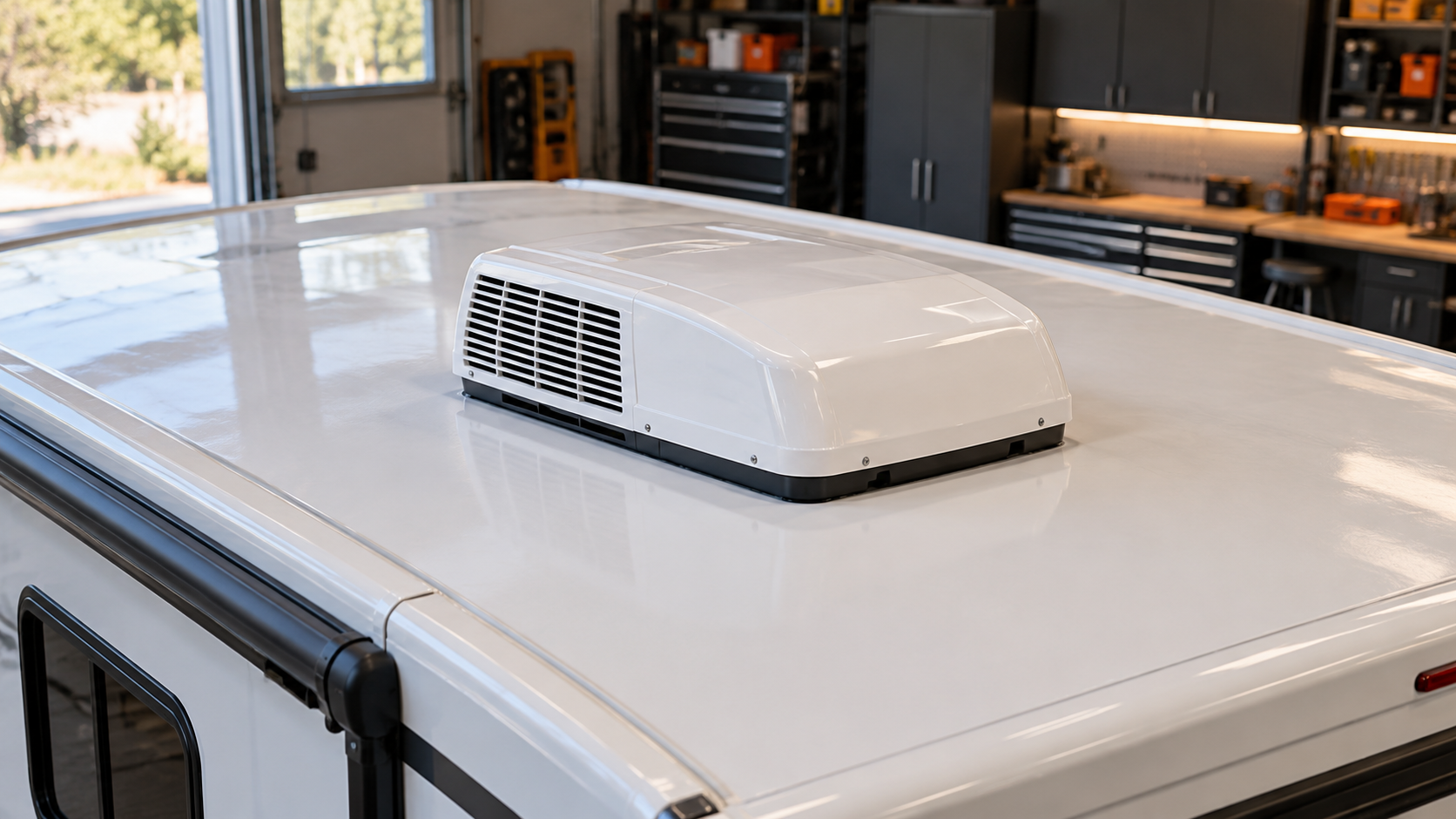
Before an RV roof coating appointment, ask a question that can disappear between the roofing and air-conditioning work: where is each rooftop A/C supposed to send its condensate, and who will confirm that route remains functional?
This is a planning check, not a drain-cleaning or air-conditioner installation guide. Its purpose is to keep the equipment’s drainage arrangement in the work scope instead of discovering an unanswered question at pickup.
Identify the installed arrangement, not just the RV model
Start with the model and serial number of each rooftop unit, the applicable installation manual and any records of a condensate pump or drain-kit installation. If a label requires roof access or disassembly, ask the service provider to obtain it.
The vehicle’s VIN is not a substitute for those equipment details. Coleman-Mach explains that it needs the A/C model or serial number to identify a unit; the air-conditioner manufacturer does not know which coach received every serial number. Its official support FAQ also directs owners with only a VIN to the RV manufacturer.
Do not assume that all roof water means the same thing
Drainage can be configured differently. For example, Coleman-Mach’s instructions for a particular 240-volt Mach 8 condensate-pump kit describe alternatives that discharge to the roof or connect to a hose routed through the vehicle. That document is evidence of different arrangements, not a kit recommendation or instructions for your RV. See the manufacturer’s model-specific pump-kit instructions.
A coach manual can add an important distinction. The 2016 Winnebago Journey operator manual describes pumped condensate drain lines. For that installation, roof runoff during A/C operation can indicate plugged lines, while some runoff in heat-pump mode is described as normal. Those observations must not be generalized to every rooftop unit.
Ask the technician to name the intended outlet and explain what normal operation looks like for your equipment and operating mode. “Water comes off the roof” is not a sufficient description until the actual system is identified.
Give the roofing and A/C teams one shared record
Use a short drainage handoff for each unit. These are proposed project questions, not a replacement for manufacturer instructions:
- Unit identification: front, middle or rear location; model; serial number; applicable manual.
- Drain arrangement: the confirmed route, outlet and any installed pump or accessory kit.
- Baseline: existing stains, unusual runoff or known drainage faults that need assessment before coating.
- Work boundary: whether the A/C stays in place or must be removed, and who is responsible for its reinstallation.
- Protection plan: how the contractor will keep required drainage openings, outlets and service access from being obstructed by the work.
- Completion check: who will check drainage after the relevant work, under the equipment instructions, and record the result.
If the roofer and A/C technician are different businesses, send the same record to both. Resolve conflicting answers before work begins. Do not authorize a new drain route, extra holes or a change to the unit’s sealing arrangement merely to make the roof finish look more continuous; get model-specific technical approval first.
Keep unresolved symptoms out of the coating promise
A new exterior finish should not be presented as the answer to an unidentified A/C drainage fault. If there is already water inside, tell the service provider before the appointment and arrange assessment rather than covering the symptom.
For moisture whose source is still unclear, use our separate guide to recording condensation and leak clues. That guide addresses observations inside the RV; this checklist addresses the equipment-drainage handoff during planned roof work.
Ask for a recorded result at pickup
Have the completion record identify the units checked, the work performed and any unresolved limitation. If conditions did not allow a meaningful operational check, ask how and when it will be completed; “not checked” should not become “passed.”
Keep the drainage record with the roof invoice and equipment manuals. The useful result is not a universal rule about dripping water. It is a documented, model-specific route that both service teams understand and preserve.
When reviewing the coating scope alongside that drainage record, keep thickness units clear with our mils, millimeters and inches reference. A unit conversion does not determine the required coating thickness or authorize covering a drainage opening.
Free quote
Ready to stop resealing?
Get a seamless polyurea roof from a certified applicator near you. Tell us about your rig in about a minute.