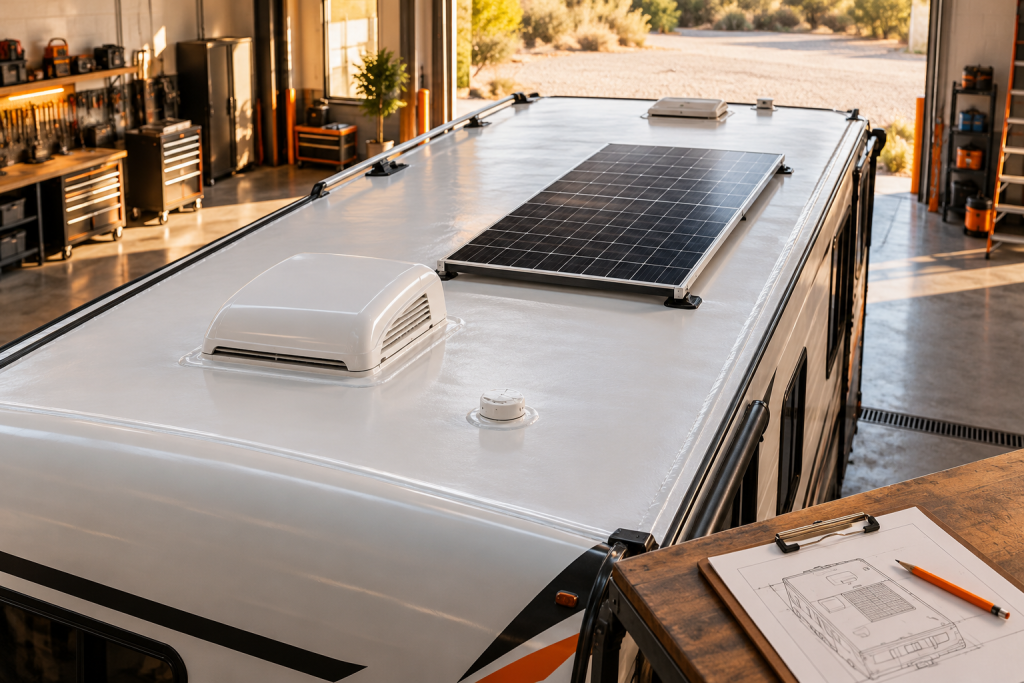
How to Extend the Life of Your RV Roof: A Complete Maintenance Guide
In short
Learn how to extend the life of your RV roof with our complete maintenance guide. Covering inspection schedules, proper cleaning methods, resealing techniques, and protective roof coatings for EPDM, TPO, and fiberglass RV roofs.
On this page
Your RV roof is one of the most critical components of your recreational vehicle, yet it often receives the least attention during routine maintenance. A well-maintained RV roof can last 10 to 20 years, while a neglected one may require costly repairs or full replacement after just five years. This comprehensive guide will walk you through everything you need to know to extend the life of your RV roof and protect your investment for years to come.
Understanding Your RV Roof Type
Before you can properly maintain your RV roof, you need to understand what type of roofing material you are working with. The three most common RV roof materials are EPDM rubber, TPO (thermoplastic polyolefin), and fiberglass. Each has distinct characteristics, maintenance requirements, and vulnerabilities that every RV owner should understand.
EPDM rubber roofs are the most common type found on older and mid-range RVs. While durable and relatively affordable to repair, they are prone to cracking, chalking, and UV degradation over time. TPO roofs offer improved UV resistance and flexibility, making them a popular choice on newer models. Fiberglass roofs are the most durable option but are also the heaviest and can be difficult to repair if they develop cracks or delamination.
The Importance of Regular Roof Inspections
Industry experts recommend inspecting your RV roof at least twice per year — once in the spring before camping season begins and once in the fall before winterization. In addition, you should conduct a visual inspection after any severe weather event, including hailstorms, high winds, or extended periods of heavy rain.
During each inspection, look for cracked or missing sealant around vents, skylights, air conditioning units, and antenna mounts. These are the most common entry points for water infiltration. Also check the roof membrane itself for any tears, punctures, blisters, or areas where the material has begun to separate from the substrate underneath.
Cleaning Your RV Roof Properly
Regular cleaning is one of the simplest and most effective ways to extend your RV roof’s lifespan. Accumulated dirt, organic debris like leaves and tree sap, and bird droppings can trap moisture and accelerate deterioration. Plan to clean your roof at least four times per year, or more frequently if you park under trees.
When cleaning an EPDM or TPO roof, avoid petroleum-based cleaners, which can break down the rubber membrane. Instead, use a mild dish soap solution or a specialized RV roof cleaner. Work in sections, scrubbing gently with a soft-bristle brush, then rinsing thoroughly. For fiberglass roofs, you can use a more aggressive cleaner and a longer scrubbing motion, but always rinse completely to prevent soap residue buildup.
Resealing and Applying a Protective Coating
One of the best investments you can make in your RV roof’s longevity is applying a high-quality protective coating. Modern polyurea-based roof coatings create a seamless, waterproof barrier over your existing roof material, providing exceptional protection against UV radiation, temperature fluctuations, and physical impact. Unlike traditional rubber sealants that crack and peel over time, polyurea coatings remain flexible and durable through thousands of freeze-thaw cycles.
Before applying any coating, ensure the roof surface is completely clean, dry, and free of loose or damaged sealant. Reseal all seams and penetration points with a compatible sealant first, then apply the roof coating according to manufacturer specifications. Most professional-grade coatings require at least 24 hours to fully cure before the vehicle can be used.
Storage and Environmental Considerations
Where and how you store your RV has a significant impact on roof longevity. UV radiation is the number one enemy of rubber and TPO roofs — prolonged sun exposure breaks down the molecular structure of these materials and leads to chalking, cracking, and brittleness. Whenever possible, store your RV in a covered or shaded location. If outdoor storage is unavoidable, invest in a quality breathable RV cover designed for your rig’s specific dimensions.
In regions with cold winters, make sure to remove any standing water or ice before it has a chance to work its way under loose sealant or into existing micro-cracks. Even a small amount of water expanding as it freezes can cause significant structural damage to roof seams and penetration points over multiple freeze-thaw cycles.
When to Call a Professional
While most routine maintenance tasks are well within the abilities of a motivated DIY owner, some situations call for professional attention. If you discover delamination of the roof substrate, widespread sealant failure across multiple seams, structural damage from impact, or water stains inside your RV indicating an active leak, it is time to consult a qualified RV roof specialist.
Professional RV roof inspectors have access to moisture meters and thermal imaging cameras that can detect hidden water damage before it becomes a catastrophic structural problem. Catching and repairing a leak early is almost always far less expensive than waiting until damage has spread to the walls, framing, or interior cabinets of your vehicle.
Key Takeaways for Long-Lasting RV Roof Protection
Extending the life of your RV roof comes down to four consistent habits: regular inspection, thorough cleaning, timely resealing, and applying a quality protective coating when appropriate. RV owners who follow a proactive maintenance schedule consistently report fewer leaks, lower repair costs, and higher resale values compared to those who address roofing issues reactively.
Whether you own a Class A motorhome, a fifth wheel, or a travel trailer, the principles remain the same. Invest a few hours each season in your roof, and your roof will protect you and your family for many seasons to come. For questions about professional roof coating solutions, explore our resources on polyurea protective coatings specifically formulated for recreational vehicles.
Free quote
Ready to stop resealing?
Get a seamless polyurea roof from a certified applicator near you. Tell us about your rig in about a minute.