RV Roof Types by Manufacturer: What Your Rig Has and What It Needs
On this page
Every RV manufacturer makes different decisions about roofing materials — and knowing what you have is the foundation of everything else. The right coating product, the right preparation method, and the right maintenance approach all depend on your specific roof construction. This guide covers the major manufacturers and what they use.
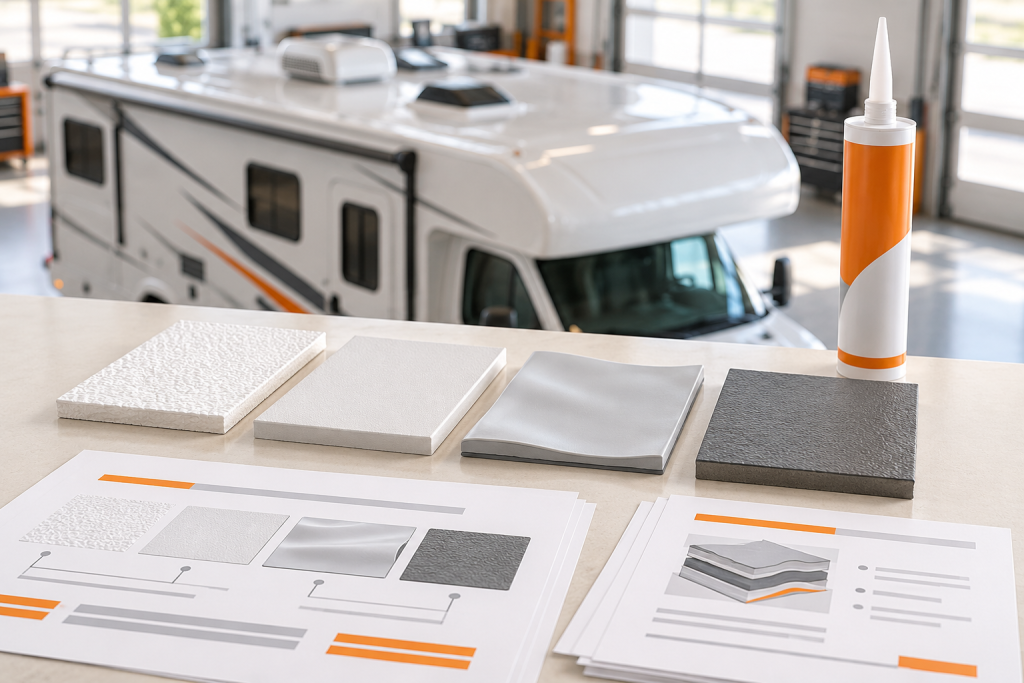
Once you know your roof type, use our Coating Options Comparison to understand which coatings are compatible.
Class A Motorhomes
Thor / Tiffin / Newmar: Most Class A models from these manufacturers use an aluminum or steel frame with fiberglass or composite roof substrate. The roof membrane varies by year and model — many use TPO or EPDM applied over the substrate. Tiffin’s Allegro series uses a proprietary laminated roof system. Our member spotlight on a Tiffin Allegro covers roof specifics for that model family.
Winnebago / Itasca: Winnebago has long favored fiberglass roof construction on their premium lines (Horizon, Grand Tour) and EPDM rubber on mid-tier models (Suncruiser, Adventurer). Their fiberglass roofs are excellent substrates for polyurea coating — the surface hardness provides exceptional adhesion.
Fleetwood / American Coach: Fleetwood uses a wide variety of substrates across their product line. Older Fleetwood models (pre-2010) frequently have aluminum substrates with significant thermal cycling vulnerability. American Coach builds on a different standard entirely — consult our certified applicators for American Coach-specific guidance.
Class C Motorhomes
Thor Four Winds / Majestic: Class C models typically use aluminum-framed roofs with EPDM or TPO membranes. The front cap area on Class C models (the forward overhang section) is a specific vulnerability point — cap seams are among the most common leak locations on this body style.
Coachmen / Forest River: Generally EPDM rubber roofs on wood or composite framing. Quality ranges significantly across the model line — entry-level models may have minimal lap sealant coverage from the factory, requiring attention from day one.
Fifth Wheel Trailers
Keystone (Montana, Raptor, Cougar): Most Keystone fifth wheels use aluminum-framed roofs with EPDM or TPO membranes. The Montana Grand is one exception with fiberglass top-cap construction on the front section. Slideout roofs on Keystone products are an area of consistent community concern — they use a different membrane material than the main roof on many models.
Grand Design / Reflection: Grand Design has established a strong reputation for roof quality. Their laminated roof construction provides better resistance to moisture infiltration than typical frame-and-membrane designs. Still benefits from professional coating for maximum longevity.
Heartland (Big Horn, Cyclone): Typically EPDM over wood frame construction. The all-aluminum-frame models in their upper lines are better suited to coating applications because of dimensional stability.
Travel Trailers
Airstream: Unique in the industry — aluminum monocoque construction with no traditional roof membrane. Airstream-specific considerations are covered comprehensively in our Airstream Roof Protection guide.
Jayco / Eagle / Jay Flight: Wide range of construction quality. Entry-level Jayco uses wood-framed construction with EPDM — these age quickly. Eagle and premium lines use aluminum framing with better waterproofing from factory.
Lance: Known for high-quality aluminum-framed construction and superior factory roof quality. Lance owners often have the best starting condition when they come to our certified applicators for coating.
Finding the Right Solution for Your Specific Rig
Manufacturer specifications only tell part of the story — the condition of your specific rig after years of use and climate exposure is equally important. Our recommendation: start with our 47-Point Inspection Checklist, then request a professional assessment from our network. Certified applicators know the manufacturer-specific quirks and will tailor their approach accordingly.
Have a manufacturer or model we didn’t cover? Post your question in our community forum — this is a living document we update based on member input.
Free quote
Ready to stop resealing?
Get a seamless polyurea roof from a certified applicator near you. Tell us about your rig in about a minute.