The Pros and Cons of ArmorThane RV Roof Coatings
On this page
ArmorThane RV roof coatings are a sprayed-on system for protecting a recreational vehicle roof from water, dirt, and UV sunlight. The system uses ArmorSeal 100 AL, SureGrip, and ArmorFlex UV together to build a seamless, flexible membrane over the existing roof. If you are comparing roof options, the advantages below are why many owners choose ArmorThane. A few practical considerations are worth knowing too, and a trained applicator can walk you through them before you decide.
Advantages
A seamless, spray-applied membrane
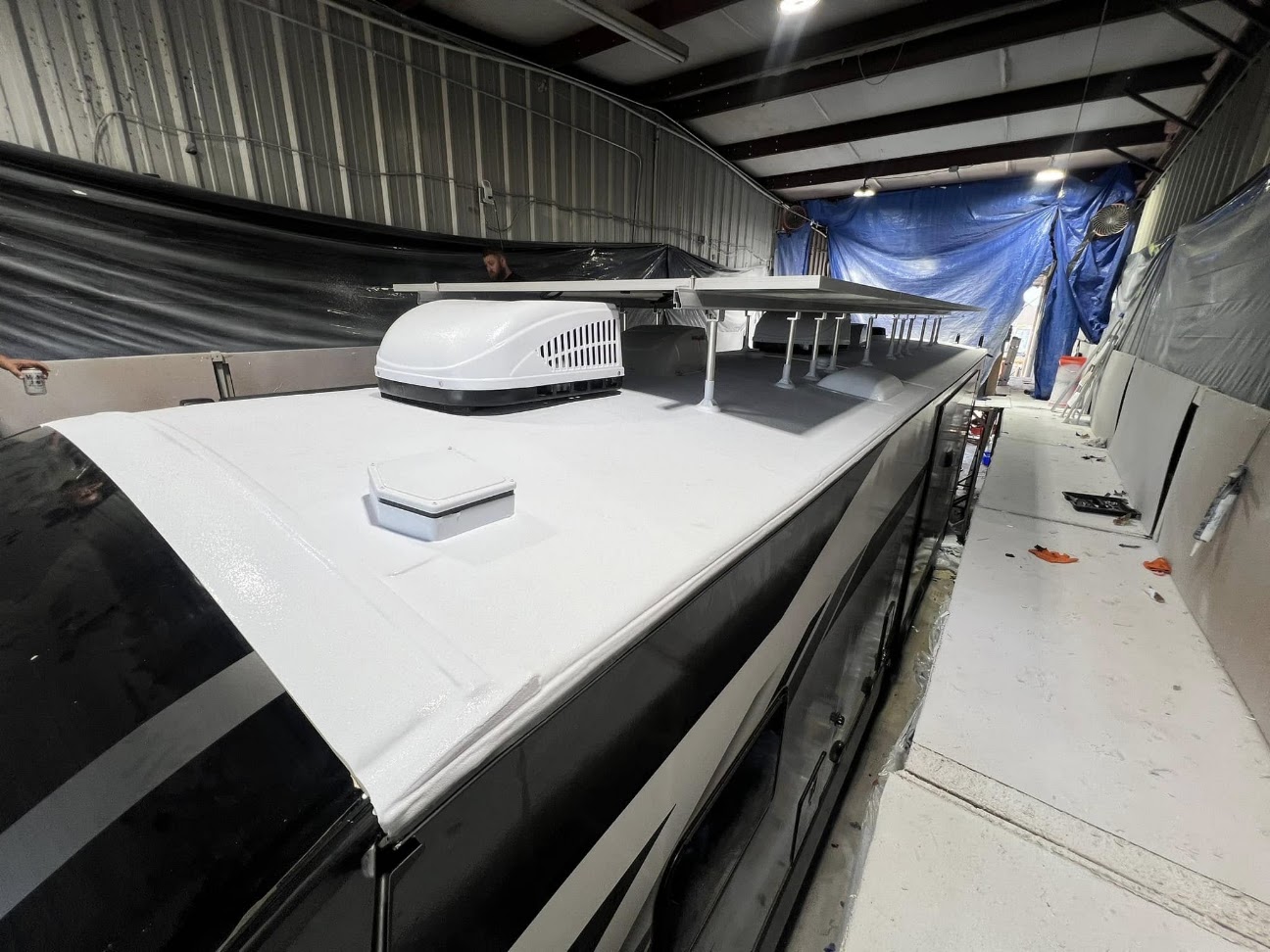
Stock rubber and TPO roofs rely on seams, laps, and sealant around vents, fans, and other penetrations. Those joints are where leaks usually start. An ArmorThane coating is sprayed as one continuous membrane, so there are no seams along the field of the roof for water to work through. The coating can wrap the deck, edge rails, and penetrations in a single, waterproof skin.
Built to flex and vibrate with the RV
An RV roof is not a still building. The chassis flexes on the road, and the deck and aluminum rails expand and contract as temperatures change. ArmorSeal 100 AL, SureGrip, and ArmorFlex UV are elastomeric coatings, so the finished membrane can stretch and recover with that movement instead of cracking the way a thin, brittle coating often does.
Strong protection from UV, water, and dirt
Sun, rain, and grime are hard on a factory roof. UV exposure is one of the main reasons rubber roofs chalk, fade, and dry out. A professionally applied ArmorThane system is designed to shield the roof from that exposure and keep water and dirt from reaching the deck underneath, which helps the roof last longer.
A thicker, more durable roof than rubber, EPDM, TPO, or a roll-on coating
Many parts-counter RV roof coatings go on as a thin film and need to be reapplied every few years. ArmorThane’s published applicator spec is 120 mils, several times the thickness of a typical roll-on coating. That extra film, plus the toughness of the spray-applied membrane, is why so many owners treat this as a long-term roof rather than a seasonal maintenance product.
Less recurring resealing and recoating
You will still want the roof inspected from time to time. You should not, however, be planning to recaulk every seam or roll on a new thin coating every few seasons the way many EPDM and TPO owners do. Cutting down on that repeat work is a large part of the long-term value of an ArmorThane roof.
A cooler, more comfortable roof in the sun
A light, reflective finish can help keep the roof surface cooler in direct sun, which many owners notice as a more comfortable interior. ArmorSeal 100 AL is an aluminized roof coating, and your applicator can help you choose a finish that looks good and reflects heat well.
Fast application and a quicker return to the road
Because the system is spray-applied by a trained technician and cures quickly, most roofs are finished in a day or two. That is usually much shorter than a full tear-off and replacement, so you can get back on the road sooner.
It can go over many existing RV roofs
When the deck is sound, ArmorSeal 100 AL, SureGrip, and ArmorFlex UV can be applied over common RV roof surfaces, including EPDM rubber, fiberglass, and painted metal. In many cases that means you do not have to tear the old roof off just to get a new waterproof membrane.
A trained applicator network behind the work
This is professional spray work, not a weekend project with a roller from the parts counter. ArmorThane has trained applicators who inspect the roof, handle prep, and apply the system the right way. You can find an ArmorThane applicator near you and ask for a quote on your roof.
Things to Consider
These are not reasons to avoid ArmorThane. They are the practical points to plan for so you get a roof you are happy with.
The upfront cost is higher than a roll-on kit
A professionally sprayed ArmorThane roof costs more at the outset than a do-it-yourself roll-on coating. That difference buys a much thicker, seamless membrane and far less repeat work. For owners who plan to keep the RV, the longer service life is what makes the investment worthwhile. A local applicator can quote your exact roof, which is the most reliable way to compare it with another option.
It should be applied by a trained technician
ArmorSeal 100 AL, SureGrip, and ArmorFlex UV are spray-applied with professional equipment. That is a genuine consideration if you were hoping to coat the roof yourself. It is also a major reason the finished roof looks uniform and holds up. Use ArmorThane’s dealer search to find a trained applicator in your area.
Surface prep matters
Any roof coating is only as good as the surface underneath it. Soft decking, active leaks, or poor prep should be handled first. A reputable ArmorThane applicator will inspect and prepare the roof before spraying. That prep is a normal part of doing the job correctly, not an extra hurdle, and it is how you get a membrane that bonds well and lasts.
The finish will look different from a stock rubber roof
The sprayed membrane is thicker than a factory film, so it will change the look of the roof. Most owners see that as a plus: a clean, uniform, freshly coated surface. If you have a preferred color or sheen, talk with your applicator before the spray date so the finished roof matches what you want.
Is an ArmorThane RV Roof the Right Choice?
For most RV owners who want a durable, seamless roof and fewer leak-and-reseal cycles, ArmorThane is a strong choice. You get a professionally applied membrane designed to flex with the vehicle, stand up to sun and weather, and reduce the upkeep that comes with a seamed rubber or TPO roof.
To see how the system works and what a finished roof looks like, visit ArmorThane’s RV roof coatings page. When you are ready for a quote, find a trained ArmorThane applicator and ask them to take a look at your roof.
Free quote
Ready to stop resealing?
Get a seamless polyurea roof from a certified applicator near you. Tell us about your rig in about a minute.