7 Roof Maintenance Mistakes That Are Quietly Destroying Your RV (And How to Fix Them)
In short
7 common RV roof maintenance mistakes identified across hundreds of inspections — and the specific fixes that prevent thousands in water damage.
On this page
After reviewing hundreds of RV roof inspections from our certified applicator network, we’ve identified a consistent set of mistakes that show up again and again — often on rigs that their owners thought were well-maintained. Here are the seven most common and most damaging errors, and exactly what to do about each one.
Mistake #1: Using the Wrong Sealant
This is the single most common error we see, and it’s often invisible until real damage has been done. EPDM rubber roofs are chemically incompatible with silicone sealants. Silicone does not bond properly to EPDM and will eventually peel away, often bringing chunks of the EPDM membrane with it. Always use self-leveling polyurethane sealant on EPDM roofs, and butyl tape or EPDM-compatible sealant on vertical seams. Our guide on how to prepare your RV roof for a coating covers compatible sealant selection in detail.
Mistake #2: Skipping the Annual Professional Inspection
Self-inspection is important, but it’s not a substitute for a professional eye. Certified applicators are trained to identify substrate delamination, membrane oxidation, and structural issues that aren’t visible from a casual walk-on-the-roof. An annual professional inspection costs a fraction of what it saves. Use our applicator finder to schedule one near you.
Mistake #3: Pressure Washing the Roof
High-pressure washing can drive water under the membrane edges and degrade EPDM rubber. Always use low-pressure washing or a garden hose with a brush attachment. For stubborn mold and algae, use an RV-specific roof cleaner and a soft bristle brush. Never use petroleum-based cleaners on rubber roofs.
Mistake #4: Ignoring Roof Vent Issues
Roof vents are one of the leading sources of RV roof leaks. The foam gaskets compress and harden over time, the plastic shroud cracks in UV, and the flashing at the base shifts with thermal expansion. Check every vent twice a year, replace cracked covers, and reseal the base flashing annually. For a full inspection protocol, see our leak detection guide.
Mistake #5: Applying Coating Over Dirty or Wet Surfaces
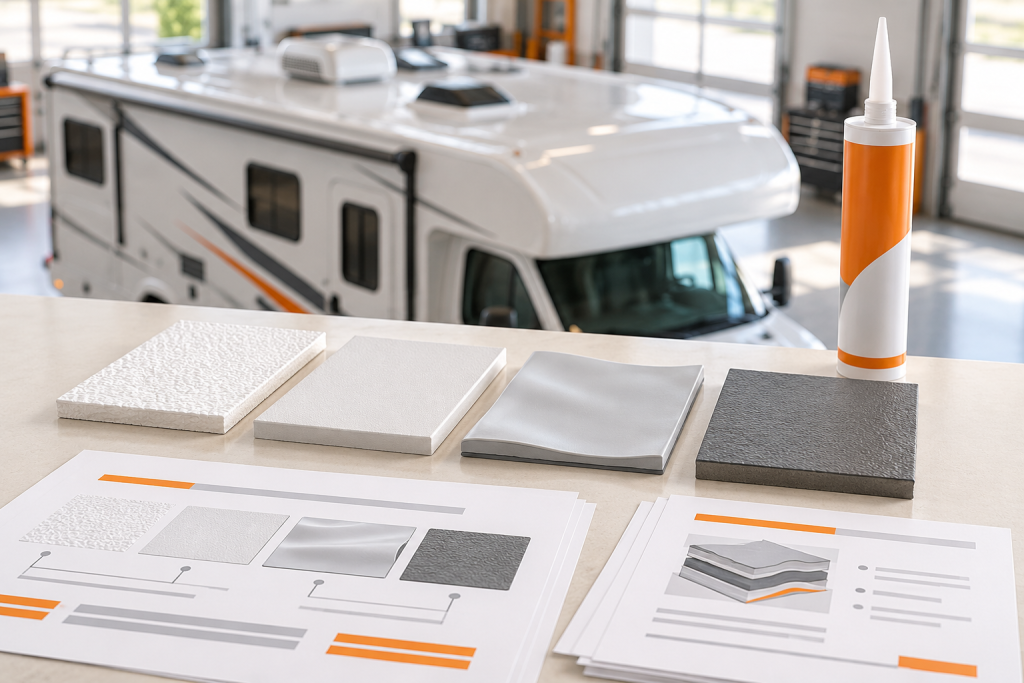
Any coating — whether DIY lap sealant or professional polyurea — applied over a dirty, wet, or contaminated surface will fail prematurely. This is why professional prep work accounts for the majority of the time in a polyurea application job. Read more about how polyurea bonds to the substrate and why a clean surface is non-negotiable.
Mistake #6: Waiting Until You See a Leak to Act
By the time you see water dripping inside your RV, the damage is already done. Water travels laterally inside wall cavities and insulation layers, meaning the wet spot you see inside may be 3–4 feet from where the actual entry point is. Act on the warning signs described in our roof leak detection article long before visible water appears.
Mistake #7: Putting Off a Full Coating “Until Next Season”
“I’ll get it coated next year” is the sentence that has cost more RV owners more money than any other. Roof degradation is exponential: once seams begin to separate, they open faster with each thermal cycle. Once water enters the substrate, mold growth accelerates rapidly. The cost of a full polyurea coating applied proactively is dramatically lower than the cost of the same coating applied after water damage has occurred — because water damage requires remediation first. See the real numbers in our complete maintenance guide and request your free quote today.
Join thousands of members in our RV community who’ve made the switch from reactive maintenance to proactive protection — and never looked back.
Free quote
Ready to stop resealing?
Get a seamless polyurea roof from a certified applicator near you. Tell us about your rig in about a minute.