RV Roof Coating With Solar Panels: Plan Access Before the Appointment
In short
Coordinate solar-panel access, removal responsibilities and roof-coating handover records before booking an RV roof appointment.
On this page
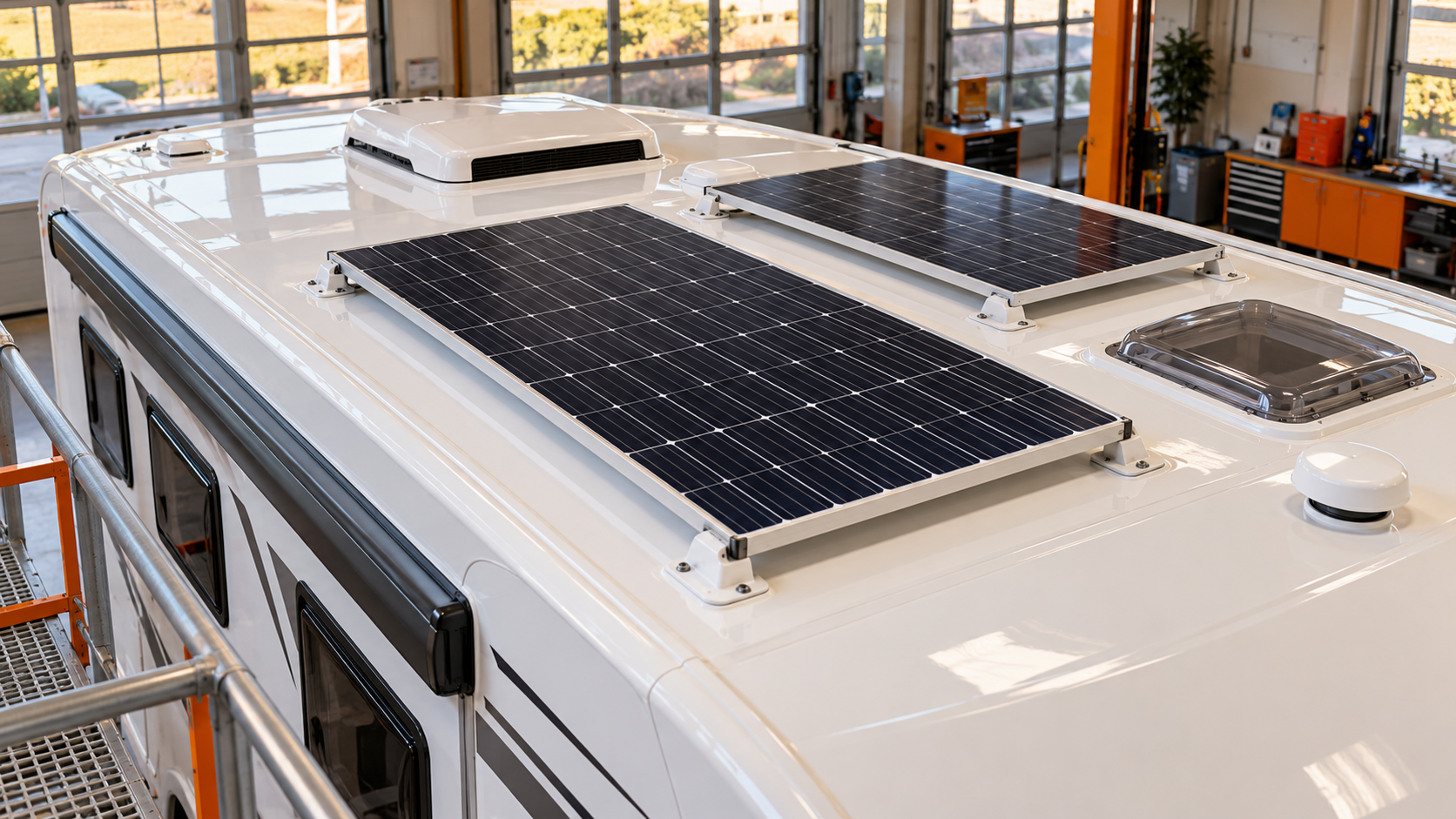
Solar panels can complicate an RV roof-coating appointment long before anyone opens a container of coating. The question is not simply whether the roof can be sprayed around them. It is whether the installer can assess the roof underneath, complete the specified preparation and leave the solar equipment serviceable afterward.
Use this planning checklist to coordinate the roof shop and the solar installer. It is researched owner guidance, not an installation procedure or a test of a particular coating. Do not disconnect electrical equipment, loosen panel mounts or climb onto a roof to gather information for an estimate.
This checklist addresses an existing solar array that is already on the roof. For the wider booking process, start with our roof-coating estimate packet; the additional issue here is coordinating access and responsibility between the roof and solar trades.
Identify the system before discussing removal
Start with documents you already have: the RV model and year, solar-panel and controller models, installation invoice, wiring information and photographs from the original installation. Note whether the panels were factory installed or added later. A brochure for your RV cannot establish the identity of replacement equipment.
Ask the roof shop which information it needs and which details its technician will verify. Keep unknown items marked unknown. A useful equipment list distinguishes the panel, its mounting hardware and the roof cable entry rather than grouping everything under “solar.”
The 2023 Jayco Swift Li owner’s manual, for example, discusses visual checks for solar hardware and roof penetrations and reserves maintenance and repairs to qualified technicians. That is a model-specific example, not a procedure for every RV. Obtain the manuals for your actual vehicle and solar equipment.
Separate the roof assessment from the coating quote
Ask what the shop will be able to inspect with the panels in place. If a panel hides a previous repair or a suspected moisture problem, record that limitation in the estimate. An attractive visible roof does not answer questions about concealed areas.
The scope should explain who decides whether equipment must be removed, what additional inspection happens after removal and how newly discovered damage changes the authorization and price. That avoids treating an initial photograph-based estimate as a final assessment of the whole roof.
A practical question is: “Which parts of the roof remain unassessed until the solar equipment is moved?” Ask for a direct answer, even if the answer is that an on-site inspection is needed. Do not ask the applicator to promise adhesion or leak performance for an area it has not evaluated.
Agree on responsibility at the electrical boundary
Roof preparation and electrical work are different tasks. Have the quote identify who is responsible for the solar shutdown, any removal, protected storage, reinstallation and operational checks. If two businesses are involved, give both the same scope and contact details.
Solar equipment should not be treated as harmless merely because the RV is unplugged from shore power. The 2023 Jayco Melbourne manual explains that its panels produce electricity when exposed to sunlight and refers owners to the component instructions. Have a qualified technician determine the isolation procedure for your installed system; this article intentionally provides no disconnection sequence.
Ask where removed equipment will be kept and who will document its condition. Photographs taken by the service team before work begins can distinguish an existing cracked component from a concern first noticed at collection.
Plan the finished interfaces, not just the flat area
Request a written description of how the proposed coating system interfaces with panel mounts, cable entries and any nearby service covers. Have the installer identify the applicable coating specification and the solar manufacturer’s requirements. “We spray everything” is not enough detail for a system that may need future servicing.
Useful questions include whether the mounts stay in place, how removable hardware remains accessible, and what happens if a panel or cable entry later needs replacement. Ask who would perform that future work and how the surrounding coating would be repaired. These are scope questions, not instructions to coat particular parts.
Also discuss future access. A coating does not establish the roof’s structural load capacity or make every part safe to stand on. The service team should use the RV manufacturer’s access instructions and suitable working arrangements rather than inferring walkability from the finish.
Collect a handover record before closing the job
Request photographs of previously hidden areas, a list of repaired locations, the coating product names and the solar work completed. Ask for the installer’s inspection and maintenance instructions in writing, including whom to contact if a mount, cable or surrounding finish needs attention.
Keep the roof and solar warranties separately identified. Ask each provider what its responsibility covers and what future alterations require prior discussion. Do not assume one warranty absorbs the other simply because the work happened during the same appointment.
Finally, arrange an explanation of the completed checks and any unresolved items. The useful outcome is a serviceable roof-and-solar assembly with a clear record—not merely a uniform-looking photograph. Coordinating access and responsibility before the appointment gives both trades a better chance to price and plan the work accurately.
Free quote
Ready to stop resealing?
Get a seamless polyurea roof from a certified applicator near you. Tell us about your rig in about a minute.