RV Roof Cover Guide: Full, Roof-Only or No Cover at All
In short
Full-body vs roof-only RV covers, what a cover does and doesn't protect against, sizing and installation without damaging the roof, and a storage planner.
On this page
An RV roof cover is worth it if your RV sits outdoors for months in strong sun, under trees or through a wet winter, as long as it’s a breathable, vented cover made for RVs, not a plastic tarp. A good cover cuts UV, sap and debris on the roof, but it isn’t waterproof and it won’t stop a snow load, so the roof still needs sound sealant and regular checks underneath. If you use the RV often, store it indoors or under a carport, or park where winds are strong, a cover may cause more trouble than it saves.
This guide covers the two kinds of covers (full-body and roof-only), what they do and don’t protect against, how to size and install one without damaging the roof, when to skip a cover, and a storage planner that recommends what fits your situation.
What an RV cover protects against
| Threat | Does a cover help? | Notes |
|---|---|---|
| Sun and UV | Yes | The main reason to cover; UV ages sealant, membranes, vent lids and skylights |
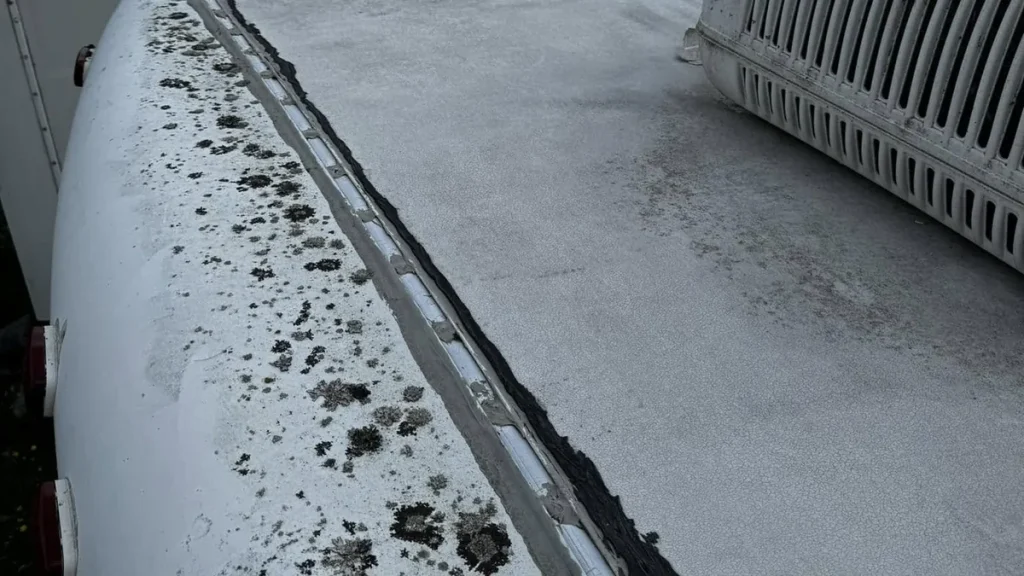
| Tree sap, leaves, bird droppings | Yes | Dicor warns sap and fallout left on a roof can cause stains that won’t come out |
| Rain | Partly | Breathable covers block a lot of moisture but are not waterproof (Bucars, an ADCO dealer) |
| Wind-blown debris | Partly | Bucars notes covers help against debris and wind catching vent lids and antennas; a loose cover can also flap and scuff |
| Snow load | No | Snow still weighs the same; Keystone warns loads over 2 feet or 30 pounds per square foot can damage the roof structure |
| Failed sealant | No | Water that gets under the cover can still find a crack |
Full RV covers vs roof-only covers vs tarps
| Type | What it is | Pros | Cons |
|---|---|---|---|
| Full-body RV cover | Fitted cover sized to your RV type and length, usually breathable fabric with air vents and zipper panels for doors | Protects sidewalls, decals and windows too; vented to reduce trapped moisture | Bulky; easier with two people; can scuff if loose or not padded |
| Roof-only cover | Fabric sheet sized to the roof, hanging a short way down the sides, held by straps under the body edge | Lighter; doors and compartments stay open; less to rub on the sides | Leaves walls exposed; many are waterproof fabric, so check how they handle trapped moisture |
| Plastic or poly tarp | General-purpose tarp tied over the roof | Cheap and easy to find | Doesn’t breathe, traps moisture and is abrasive and hard to fasten (Bucars) |
| Carport or RV shelter | A roof over the RV rather than on it | Shades without touching the RV; nothing to put on or take off | Needs space and sometimes a permit; doesn’t stop wind-blown rain at the sides |
Fitted full covers are the traditional choice. Camping World’s cover guide points out that vented designs, such as the air vents on Classic Accessories covers, reduce wind stress and help cut moisture and mildew inside the cover. Roof-only covers are a newer category; makers such as Norvella and CaraShell describe them as 10-foot-wide waterproof fabric covers that go over the AC and vents, hang about 12 to 16 inches down the sides to cover the roof-to-wall seam, and strap to hooks under the body edge.
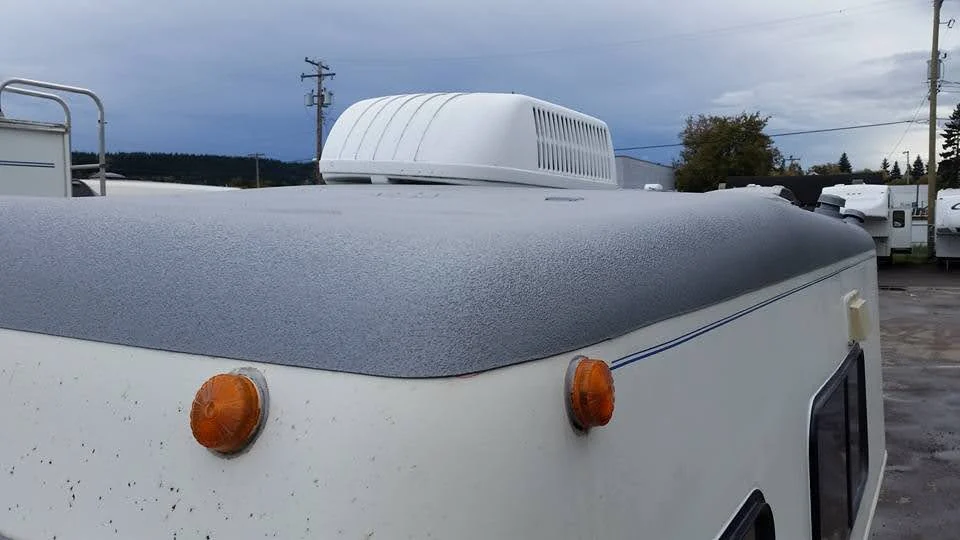
Features that matter on a full RV cover
| Feature | Why it matters |
|---|---|
| Breathable fabric | Lets moisture escape so it doesn’t sit against the roof and sealant |
| Air vents | Camping World notes vents reduce wind stress and help cut moisture and mildew inside the cover |
| Zippered door panels | Let you get inside to check for leaks or run a dehumidifier without pulling the cover |
| Adjustable tension panels and elastic hem corners | A snugger fit flaps less in the wind |
| Gutter covers and ladder caps | Pad the sharp points that tear covers and wear spots in them |
| Straps with a toss bag or weighted buckles | Make it easier to pass straps under the RV without crawling underneath |
| Warranty terms | Read what’s excluded; ADCO, for example, excludes wind damage |
Look for a cover made for your specific RV type, not a universal one. Fitted covers sit closer to the shape of the coach, so there’s less loose fabric to catch the wind.
When a roof-only cover makes sense
A roof-only cover is a middle ground. It’s lighter to handle, and because doors, compartments and windows stay uncovered, you can get into the RV and its storage bays without unstrapping anything. Makers describe them as going on by placing the bundle on the roof, pulling the fabric out to cover it, latching straps under the edge of the body and tightening cross straps over the top. That makes them a fit for owners who can safely get onto their roof and mainly worry about rain, snowmelt and debris on the roof and its seams through the off season.
Two things to weigh. First, the sidewalls, windows and decals stay exposed to sun. Second, the roof-only covers we’ve seen advertised use waterproof fabric rather than breathable cloth, which keeps rain out but can also hold in moisture that gets underneath, so check the roof and the inside of the RV after long wet spells. If your roof isn’t walkable, a roof-only cover that’s installed from on top isn’t the right choice; see can you walk on an RV roof.
Storage and cover planner
Tell the planner where and how long the RV is stored and what it faces. It scores the exposure and suggests whether a cover makes sense and which kind.
RV storage and cover planner
A rough exposure score, not a guarantee. Always follow your cover maker’s and RV maker’s instructions.
Why you shouldn’t use a tarp
A tarp seems like the obvious cheap answer, and it’s the one most likely to backfire. Bucars, a Canadian RV dealer, says plainly that a tarp isn’t recommended because it doesn’t breathe and can trap moisture, which leads to mold, and that tarps are abrasive and hard to fasten properly. Moisture under a tarp sits against the roof and sealant for weeks. Wind works a tarp back and forth, and the grommets and ropes rub the membrane, the edge trim and the sealant over the screw heads. If you need to protect a roof for a night or two during a storm, a tarp tied down carefully is a stopgap. For storage, use a cover made for RVs.
How to size an RV cover
- Measure end to end. ADCO’s installation guide says to include bumpers, the spare tire and the ladder, but exclude the hitch and mirrors.
- Match the RV type. Full covers are cut for travel trailers, fifth wheels, Class A, B and C motorhomes and so on, because the shapes differ.
- Allow for roof gear. AC units, satellite domes and solar racks add height. Roof-only cover makers suggest going up a size if you have a lot of gear.
- Check the height on full covers so the hem reaches where the straps attach.
A cover that’s too big billows and flaps; one that’s too small strains seams and straps. When you’re between sizes, follow the maker’s sizing chart rather than guessing.
How to put an RV cover on without damaging the roof
- Inspect and fix the roof first. A cover hides the roof for months. Reseal anything that’s cracked before it goes on; see our reseal interval guide.
- Clean the RV. ADCO warns that a dirty RV risks black streaks under the cover. Use a roof-safe cleaner from our RV roof cleaner guide.
- Close everything. Vent lids closed, antenna down, awning in.
- Pad sharp edges. ADCO says to pad rain gutters, steps, ladders and other abrasive points, using the gutter covers and ladder cap supplied with its covers.
- Roll the cover up the RV, front first. ADCO’s guide says installation doesn’t require climbing on the roof; a ladder works, though it’s faster if your roof is safe to walk on. If you’re not sure, see can you walk on an RV roof.
- Square it up so the corners line up with the RV’s corners.
- Strap it. ADCO says straps should be moderately tight, not overtightened, and that no extra straps, buckles or rope should be used, or you risk damaging a rubber roof or scuffing the finish.
- Check it after the first windy day and re-tension if it’s shifted.
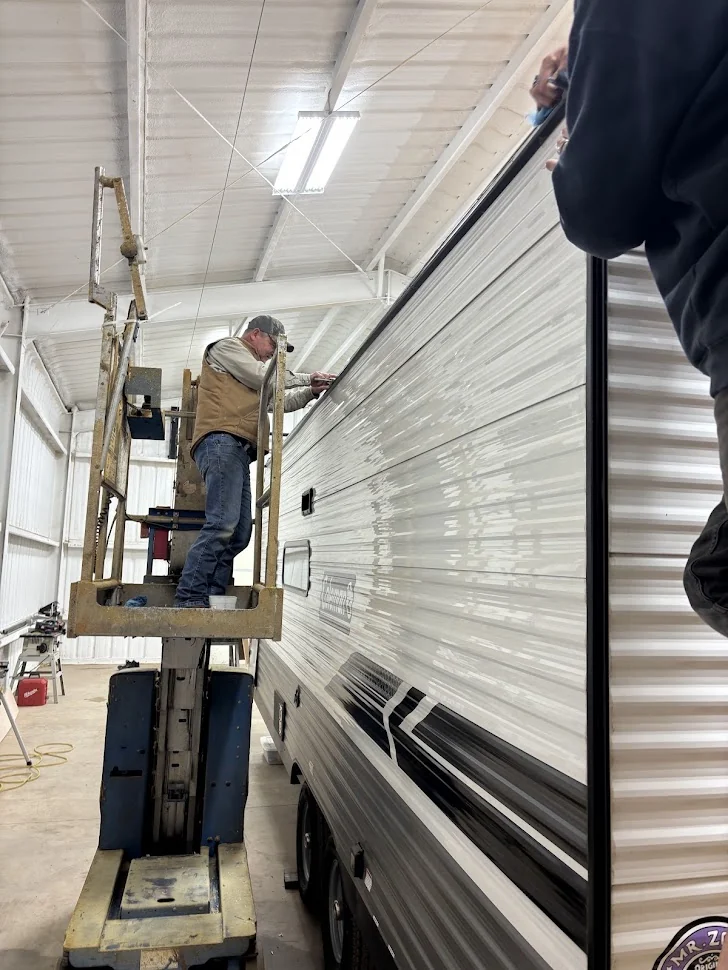
Taking the cover off
Removal is the install in reverse, and it’s where covers pick up dirt that later scratches the RV. ADCO’s guide says to undo the straps and buckles, pull the cover off the front and rear corners, then work from the ladder or roof to pull the front of the cover up, fold the sides up onto the roof and roll it into a strip along the length of the roof, so it’s ready for next time. It also warns to stay clear of AC units and any part of the cover that isn’t lying flat if you’re on the roof. Let a wet cover dry before you pack it away, and shake out grit so it doesn’t go back on the RV next season. Then give the roof a proper look before your first trip.
Covering a freshly sealed or coated roof
Timing matters if you’ve just done roof work before storage. Dicor says a newly coated roof has to stay free of all moisture, including dew, for 48 hours to cure, and that its lap sealant skins over in minutes but takes about 30 days to cure fully at 50 to 70 degrees, longer in cold weather. A cover pressed onto soft sealant can stick to it or dent it, and a cover laid over a coating that hasn’t cured can trap the moisture the coating needs to shed. Plan roof work a few weeks before the cover goes on, and follow your coating maker’s cure times if they differ.
Covers and wind
Wind is the biggest risk to a cover and to the RV under it. A loose cover flaps against the roof and sides, and anything sharp it rubs over can wear through it. ADCO’s own guide says the cover may shift in the wind and could tear if sharp edges aren’t padded, and that ADCO does not warrant its covers against wind damage. If you store somewhere with frequent high winds, a carport, an indoor spot or simply good maintenance without a cover may be the better choice. If you do cover, a well-fitted, vented cover with every strap set correctly holds better than a loose one.
Covers and snow
A cover doesn’t change how much snow a roof can carry. Keystone’s owner’s manual warns that snow loads over 2 feet or 30 pounds per square foot can damage the roof structure, axles and suspension, and says the roof should be clear of snow before the RV is moved. Snow sliding off a slick cover can be a plus, but heavy wet snow and ice still need clearing, and climbing onto a snowy, covered roof is risky. Brush snow off from a ladder where you can. Our roof winterization guide covers the rest of the cold-weather prep.
Check under the cover
A cover can hide a leak until spring. During long storage:
- Open the RV after heavy rain or snowmelt and check ceilings, vent trim and cabinet corners for stains or a musty smell.
- Keep the inside ventilated or run a dehumidifier if you have power, so moisture from inside doesn’t condense under a cold roof.
- Pull the cover back partway at least once mid-season to look at the roof and the cover’s underside.
- Re-tension straps after storms.
- Check vents and skylights when you’re up there; our guide to RV roof vents covers what to look for, and any area that feels spongy may be one of the soft spots that start from slow leaks.
When the cover comes off in spring, do a full inspection before the first trip. Our roof maintenance schedule includes a spring de-storage checklist.
When to skip a cover
- You use the RV every week or two. Taking a cover on and off that often is a chore, and folding a dirty cover makes it abrasive.
- It’s stored indoors or under a carport. A roof over the RV does most of what a cover does without touching it.
- Strong, frequent winds and no way to keep the cover snug.
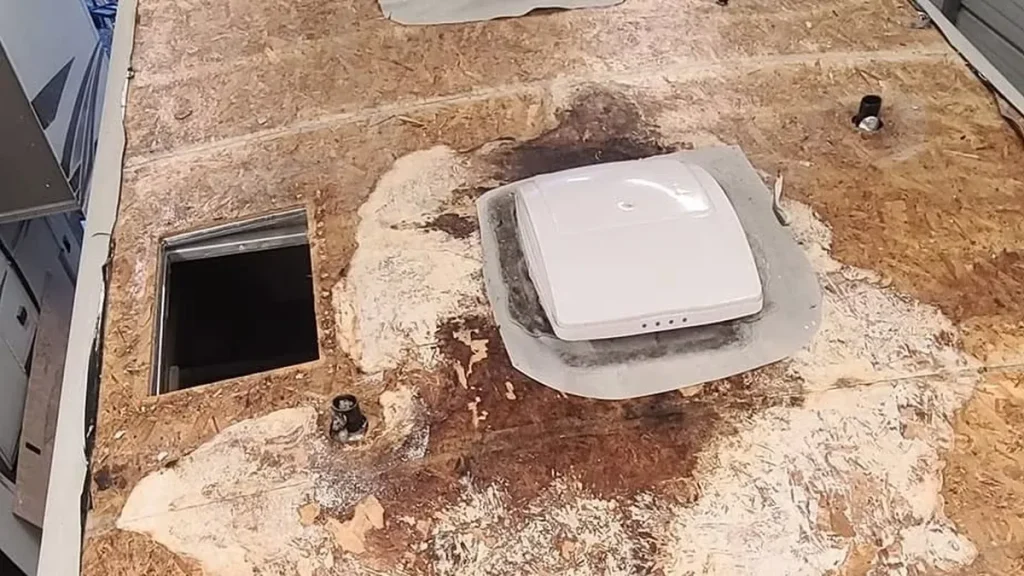
- The roof has active leaks or failed sealant. Fix those first; a cover isn’t a repair. Our leak repair guide helps.
Cover vs a longer-lasting roof surface
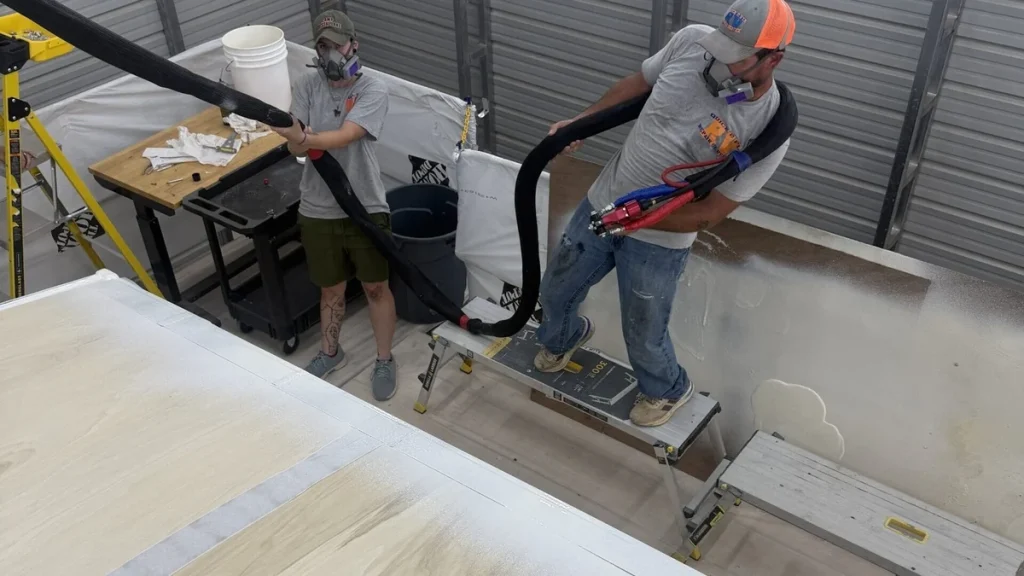
A cover protects whatever roof you have from the weather. It doesn’t fix an aging membrane. If your roof is chalking, the sealant needs constant touch-ups, or you’re spending a lot of time on and off the roof, the roof surface itself may be the better place to spend money. Options include a new membrane, a liquid coating or a sprayed roof system, compared in our RV roof types guide and coating guide. Among sprayed systems, ArmorThane applicators offer three for RV roofs: ArmorSeal 100 AL, SureGrip with a UV topcoat, and ArmorFlex UV, described on ArmorThane’s RV roof coatings page. Whatever the roof, storage still matters: shade and a good cover lengthen the life of any surface.
For more on protecting a parked rig, see our posts on protecting your RV roof when it’s not in use and roof protection for snowbirds.
Frequently asked questions
Is an RV roof cover worth it?
For an RV stored outdoors for months in strong sun, under trees or through a wet winter, a breathable, vented cover is usually worth it. If you use the RV every week or two, store it indoors or under a carport, or park in frequent strong winds, a cover may not be.
Are RV covers waterproof?
Most fitted RV covers are not designed to be waterproof. Bucars, an ADCO dealer, explains they’re made of breathable material that blocks a lot of moisture without sealing it in. Some roof-only covers use waterproof fabric instead.
Can I use a tarp to cover my RV roof?
Not for storage. A tarp doesn’t breathe, can trap moisture that leads to mold, is abrasive and is hard to fasten securely. Use it only as a short stopgap in a storm.
Do I need to climb on the roof to put a cover on?
No. ADCO’s installation guide says installation doesn’t require climbing on the roof; you can work from a ladder, though it’s faster if your roof is safe to walk on.
How do I measure for an RV cover?
ADCO says to measure end to end including bumpers, the spare tire and the ladder, but not the hitch or mirrors. Then match the cover to your RV type and allow for roof gear.
Does an RV cover protect against snow?
It keeps snow off the roof surface but doesn’t reduce the weight. Keystone warns snow loads over 2 feet or 30 pounds per square foot can damage the roof structure, so clear heavy snow from a ladder.
Sources
- ADCO: RV cover installation guide (sizing, cleaning, padding, straps, wind)
- Bucars RV: Do I need an RV cover? (breathable vs waterproof, tarps)
- Camping World: RV cover finder (vented covers and cover features)
- Norvella: RV roof cover and CaraShell: roof cover (roof-only cover design)
- Keystone RV: 2027 Owner’s Manual (snow load)
- Dicor Products: FAQ (sap and stains)
Free quote
Ready to stop resealing?
Get a seamless polyurea roof from a certified applicator near you. Tell us about your rig in about a minute.