RV Roof Types: How to Tell EPDM, TPO, Fiberglass Apart
In short
How to tell EPDM, TPO, PVC, fiberglass, aluminum and coated RV roofs apart, why it matters for cleaning, sealing and coating, and a quiz that identifies yours.
On this page
Most RVs have one of five roof types: EPDM rubber, TPO, PVC, fiberglass or aluminum, and some have a coating or spray system on top of one of those. The quickest way to tell them apart is to check your paperwork, then look at the underside of the membrane at a roof vent: a white top with a black backing usually means EPDM, while the same color on both sides points to TPO. Rigid, glossy shells are fiberglass, and riveted metal panels are aluminum.
Knowing which one you have isn’t trivia. It decides which cleaners are safe, which sealants are allowed, which coatings will bond and what can void your warranty. This guide walks through each roof type, gives you a quiz to identify yours, and lays out a care plan for each.
RV roof types at a glance
| Roof type | What it looks like | Where you’ll find it | Key care point |
|---|---|---|---|
| EPDM rubber | Flexible white or dove gray sheet, black underneath; chalks over time | Many towables and motorhomes | Chalking is normal; use the roof maker’s cleaner and sealant |
| TPO | Flexible sheet, same color both sides, smooth or embossed; made not to chalk | Many newer towables and motorhomes | Gentle cleaners only; some makers forbid protectants |
| PVC | Flexible sheet similar to TPO | Less common | Follow the membrane maker’s care sheet |
| Fiberglass | Rigid, glossy gelcoat shell | Some motorhomes and trailers | Seams and fixtures still need sealant; gelcoat oxidizes |
| Aluminum | Metal panels with seams and rivets | Airstream, Bowlus and some older trailers | Rivets and seams are the weak points |
| Coated or sprayed | Thick painted-looking or textured surface over another roof | Any RV that’s been recoated | The coating maker’s rules apply |
Which RV roof do I have? Take the quiz
Answer what you can. If you don’t know an answer, pick “not sure”; the quiz weighs the clues you’re confident about and tells you how sure it is.
RV roof type quiz
Five quick questions. Your paperwork beats any visual clue, so answer that one if you can.
How to identify your RV roof step by step
- Check the paperwork first. The owner's manual, the original window sticker or the build sheet often names the roof material. If not, Camping World suggests contacting the RV manufacturer with your VIN.
- Look under a vent trim ring. Keystone RV's guidance is to remove the interior trim ring of a roof vent and look at the edge of the membrane. A white or dove-colored top with a black backing points to EPDM. The same color on both sides points to TPO, which may have a smooth or fleece backing.
- Do the chalk test. Rub a clean, dry hand across the membrane. EPDM is designed to oxidize, so a white chalky residue is typical. TPO is made not to chalk, so a TPO roof should leave little or nothing on your hand.
- Feel for rigidity. If the roof is a hard, glossy shell that curves into the walls with few seams, it's fiberglass. If you see metal panels joined by seams and rivets, it's aluminum.
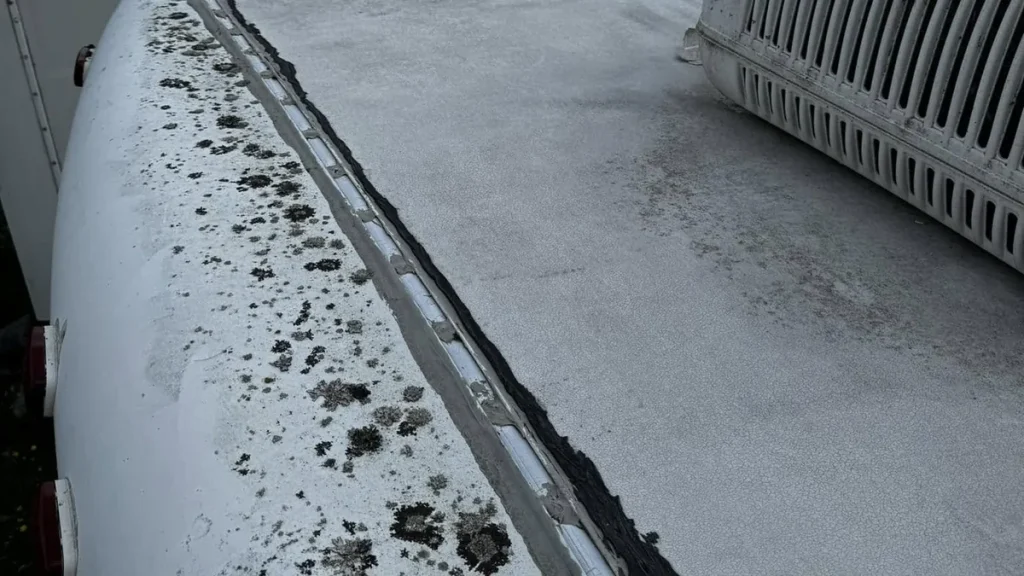
- Look for a coating. A thick, uniform layer over seams and fixture edges, sometimes textured, suggests the roof has been coated or sprayed. Ask the previous owner or check service records for the product.
- Don't rely on fleece alone. Camping World notes that fleece backing isn't a reliable way to identify a roof, since different membranes can have it.
If you're about to buy sealant, our post on identifying the surface before buying sealant covers the same ground from the repair side.
EPDM rubber roofs
EPDM, short for ethylene propylene diene monomer, is the classic "rubber roof." It's a flexible synthetic rubber sheet glued to the roof decking, with lap sealant around every fixture and along the edges.
The trait owners notice first is chalking. Dicor, a major supplier of RV EPDM, explains that its EPDM is designed to oxidize, losing roughly 10 percent of its thickness over about a dozen years. That white residue that streaks down the sidewalls is the oxidized surface washing off. Dicor's Brite-Ply EPDM is .035 inch thick, and Dicor says a properly maintained roof should last at least 20 years.
Care plan for EPDM:
- Clean at least four times a year, per Dicor, with its rubber roof cleaner and a medium-bristle brush.
- Avoid petroleum solvents, harsh abrasives, citrus cleaners and acetone, which Dicor says can damage the membrane and may void the warranty.
- Use a protectant only if it's the roof maker's own; Dicor offers Roof Gard.
- Reseal with lap sealant compatible with EPDM; Dicor allows its self-leveling sealant directly over its existing sealant after cleaning.
Our RV roof cleaner guide has a compatibility checker for EPDM and every other roof type here.
TPO roofs
TPO, thermoplastic polyolefin, looks a lot like EPDM from above but behaves differently. It's made not to chalk, it's usually the same color on both sides, and it can be smooth or embossed with a pebbled texture. Dicor's DiFlex II TPO is embossed and .027 inch thick, and its BriteTEK TPO is .030 inch.
Alpha Systems, another large RV membrane supplier, is strict about care. It recommends cleaning three to four times a year with a non-abrasive cleaner such as dish soap, says protectants aren't needed and can damage the membrane, and says only Alpha sealants should touch its roofs. Its TPO care sheet specifically warns against oil- or solvent-based cleaners and products like Armor All.
Care plan for TPO:
- Gentle cleaner and a soft or medium brush, per the membrane maker's care sheet.
- No protectants unless the maker approves one.
- Only the sealant brand the maker allows, applied within its temperature range.
PVC roofs
PVC membranes are less common on RVs. Camping World groups them with the flexible single-ply roofs. Dicor's Tufflex PVC is .027 inch thick, and Dicor says it isn't affected by ponding water, which can matter on a roof with low spots. Care follows the same logic as TPO: use the maker's care sheet, gentle cleaners and approved sealants.
Fiberglass roofs
A fiberglass roof is a rigid shell finished with gelcoat. It's tougher underfoot than a membrane and doesn't have the long glued seams a membrane roof has. It still has every fixture a membrane roof has, plus joints where the roof meets the caps and sidewalls, and those all need sealant. Gelcoat also oxidizes in the sun and can turn dull and chalky, much like fiberglass boats.
Care plan for fiberglass: gentle cleaning, regular sealant checks at every fixture and seam, and, if the gelcoat is badly weathered, a coating designed for fiberglass. Our RV roof coating guide covers what bonds to fiberglass.
Aluminum roofs
Aluminum roofs are riveted metal panels, best known from Airstream and Bowlus. They don't chalk like EPDM and won't rot like a wood deck, but every rivet and seam is a potential leak, and mold cleaners and harsh chemicals can stain or corrode the finish. Our posts on Airstream roof protection and keeping an Airstream roof in shape go into detail.
Coated and sprayed roofs
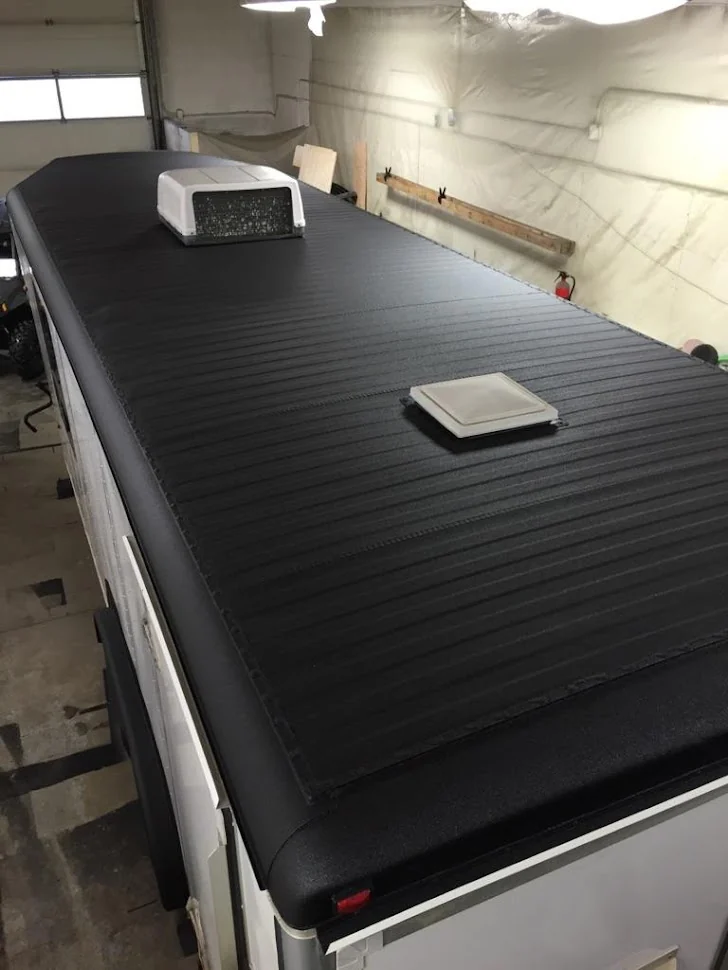
Many RVs have had a coating applied over the original roof: acrylic, silicone, liquid rubber or polyurea. Once that's done, the coating becomes the surface you're caring for, and its maker's instructions take over. Silicone is the one to watch: very little bonds to it besides more silicone, so knowing that's what's up there matters before any future repair. We compare the main options in liquid rubber vs silicone vs polyurea.
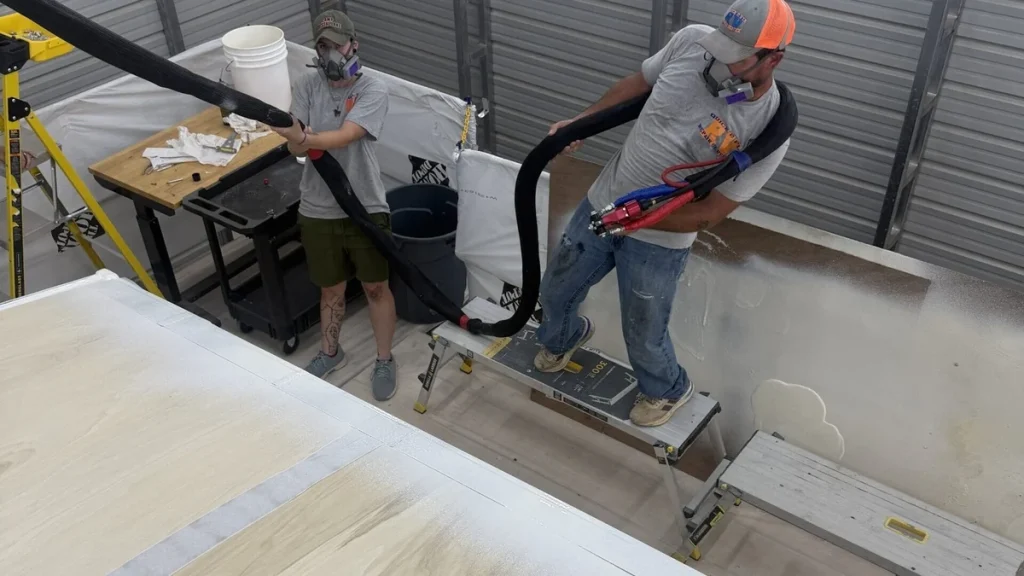
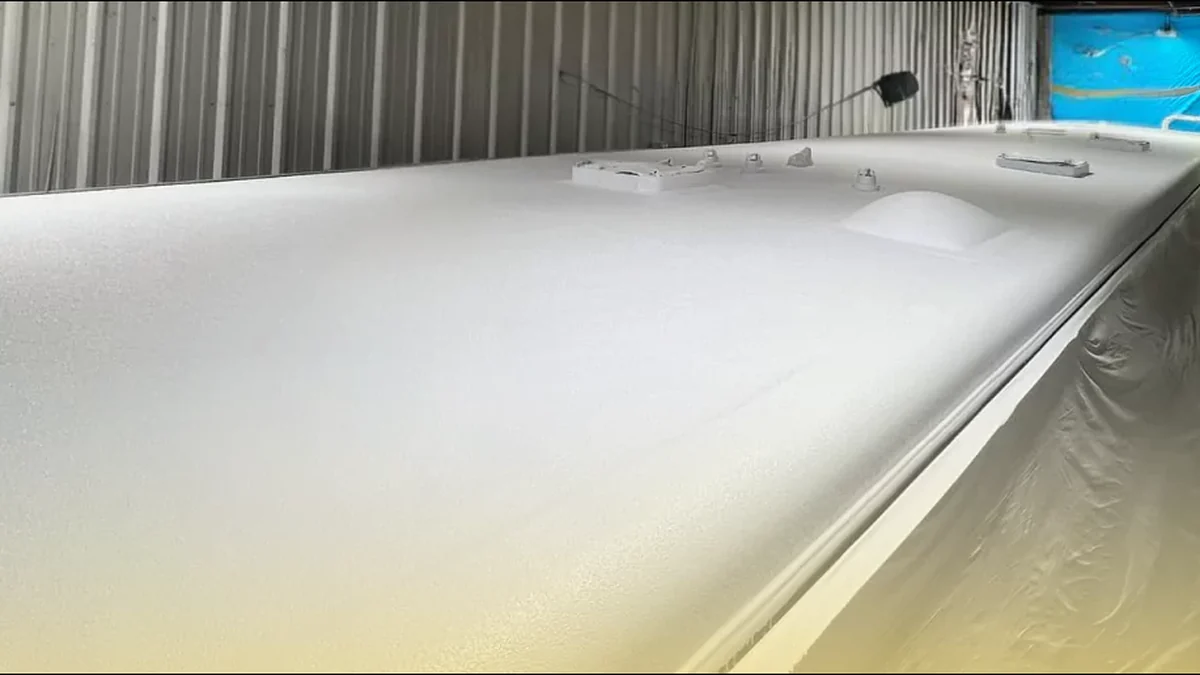
Professionally sprayed roofs are their own category. Applicators using ArmorThane products can choose from three RV roof systems: ArmorSeal 100 AL, SureGrip with a UV topcoat, or ArmorFlex UV. ArmorThane's RV roof coatings page explains each one.
What's under the roof surface
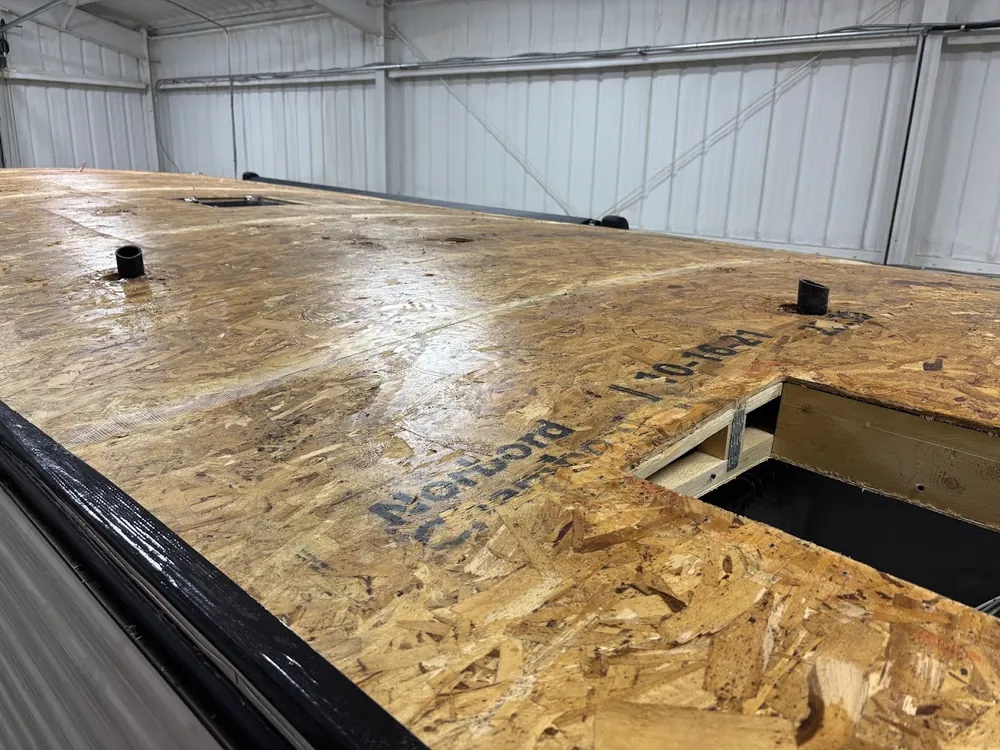
The surface you can see is only the top layer. On most membrane roofs, the EPDM, TPO or PVC sheet is glued to a wood deck of plywood or OSB, which sits on the roof framing with insulation below. That deck is what the membrane protects, and it's what rots when water gets past a failed seal. The decking photo earlier in this guide shows what that layer looks like with the old membrane stripped off during a replacement.
Fiberglass and aluminum roofs are built differently, but they still have structure and insulation beneath them, and water that gets in at a fixture causes the same kind of hidden damage. Whatever the surface, soft spots underfoot mean the layer beneath needs attention before anything else goes on top.
Roof type questions to ask when buying a used RV
A roof's material and condition say a lot about what you're taking on. Before you buy, ask:
- What is the roof material, and is it original? If it's been replaced or coated, ask what was used and when, and for receipts.
- Has it been coated? A coating changes the care rules and, in some cases, the warranty. Silicone in particular limits what can go on top later.
- When was the sealant last redone? Old, cracked sealant at every fixture is a sign of skipped maintenance.
- Are there soft spots or ceiling stains? Walk the roof if it's safe and look inside around every vent.
- Is any roof warranty still active, and is it transferable? Check what maintenance records it requires.
Our RV buyer's roof inspection checklist covers the rest.
EPDM vs TPO: the two you're most likely to have
| EPDM | TPO | |
|---|---|---|
| Material | Synthetic rubber | Thermoplastic polyolefin |
| Underside | Usually black | Usually same color as top; smooth or fleece |
| Chalking | Yes, by design | Made not to chalk |
| Typical Dicor thickness | .035 inch (Brite-Ply) | .027 to .030 inch (DiFlex II, BriteTEK) |
| Texture | Smooth, slightly rubbery | Smooth or embossed |
| Cleaners to avoid | Petroleum solvents, citrus, acetone, harsh abrasives (Dicor) | Oil or solvent cleaners, abrasives, shine products (Alpha) |
| Protectant | Maker's own, such as Dicor Roof Gard | Often not recommended (Alpha) |
Neither is automatically better. Both are thin membranes that depend on sound decking and good sealant. What matters most is matching your care to the one you have.
How sun, heat and storage affect each roof type
Where and how you keep the RV changes how fast any roof ages. Sun is the big one. UV is what drives EPDM's built-in oxidation and the chalking that comes with it, it dulls fiberglass gelcoat, and it makes plastic vent lids and skylight domes brittle on every roof type. Heat and cold cycles work sealant at every joint, which is why sealant checks matter more in climates with big temperature swings. Trees add sap, leaves and branch damage, and Dicor warns that sap and fruit can leave stains on its EPDM that won't come out.
A covered spot or a breathable RV cover slows all of this, and a roof that's cleaned and inspected on schedule shows problems while they're small. Before storage, our roof winterization guide covers what to do for each season.
Why getting it wrong costs money
Using the wrong product on a roof membrane can do lasting harm. Dicor warns that the wrong cleaners can cause irreparable damage and may void the warranty. Alpha Systems restricts sealants to its own. Coatings bring their own rules: Dicor's 10-year material-only warranty for its silicone coating states that coating an existing roof voids what's left of the underlying roof's warranty. Before you clean, seal or coat, confirm the roof type and read its maker's care sheet.
Which RV roof type needs the most protection?
Every roof type shares the same weak points: the vents, fans, AC, skylights, antennas and edges where something passes through or two materials meet. Membrane roofs add long glued seams and a surface that wears thinner with UV exposure, so they usually need the most frequent attention. Fiberglass and aluminum are tougher on the surface but still leak at fixtures and seams. Whatever you have, a regular routine is the real protection. Our roof maintenance schedule builds one for your roof type.
Changing roof types when you replace
When a roof is replaced, you aren't locked into the original type. Some owners go from EPDM to TPO, some to a sprayed system, and Dicor sells retrofit kits for its membranes. Camping World notes Dicor's position that the decking must be replaced whenever a roof is replaced. Our RV roof replacement guide compares the options, and the roof types by manufacturer post covers what common brands use.
How each roof type tends to fail
Each material has a typical way of telling you it's in trouble, and knowing it helps you catch problems early. For repairs, see our RV roof repair guide and the leak repair guide.
- EPDM: heavy chalking, thinning, cracked lap sealant at fixtures, punctures from branches, and bubbles or loose areas where the adhesive has let go.
- TPO and PVC: cracked or missing sealant, punctures, and loose spots. A seam that's started to lift is worth catching early.
- Fiberglass: dull, chalky gelcoat, fine cracks around fixtures and failed sealant at cap and edge joints.
- Aluminum: loose or leaking rivets, failed seam sealant and corrosion at fasteners.
- Coated roofs: peeling, cracking or thin spots, often where prep was rushed or the coating didn't suit the substrate.
Roof type also affects day-to-day care: see our guides to whether you can walk on an RV roof, how often to reseal an RV roof and RV roof covers.
Frequently asked questions
How do I know if my RV roof is EPDM or TPO?
Remove a roof vent's interior trim ring and look at the edge of the membrane. Keystone RV says a white or dove top with a black backing indicates EPDM, while the same color on both sides indicates TPO. EPDM also chalks over time; TPO is made not to.
What is the most common RV roof type?
Flexible single-ply membranes, EPDM rubber and TPO, are found on a large share of RVs. Fiberglass and aluminum roofs are less common, and PVC is the least common of the membranes.
Is my RV roof rubber or fiberglass?
A rubber roof is a flexible sheet that gives slightly underfoot and has lap sealant along its edges. A fiberglass roof is a hard, glossy gelcoat shell. If you're unsure, check your paperwork or contact the manufacturer with your VIN.
Is TPO better than EPDM for an RV roof?
Neither is automatically better. TPO is made not to chalk and is often embossed; EPDM chalks by design. Both are thin membranes that depend on good decking and sealant, so matching your care to your roof matters more than the material.
Can I tell my roof type from the fleece backing?
Not reliably. Camping World notes that fleece backing appears on more than one membrane type. Use your paperwork, the VIN or the backing color seen at a vent opening instead.
Can I change my RV roof type when I replace it?
Yes. Owners can switch from EPDM to TPO, use a retrofit membrane kit or choose a sprayed system. Camping World notes Dicor's position that the decking must be replaced whenever a roof is replaced.
Sources
- Keystone RV: EPDM or TPO roof? (vent trim ring identification)
- Camping World: RV roof types (types, VIN, fleece, decking)
- Dicor Products: FAQ (thickness, oxidation, lifespan, cleaners)
- Dicor Products: EPDM roof care
- Alpha Systems: Product care
- Dicor: Silicone coating 10-year material-only limited warranty
Free quote
Ready to stop resealing?
Get a seamless polyurea roof from a certified applicator near you. Tell us about your rig in about a minute.